Monday, March 4, 2013

Wait, what? Opera is dead?

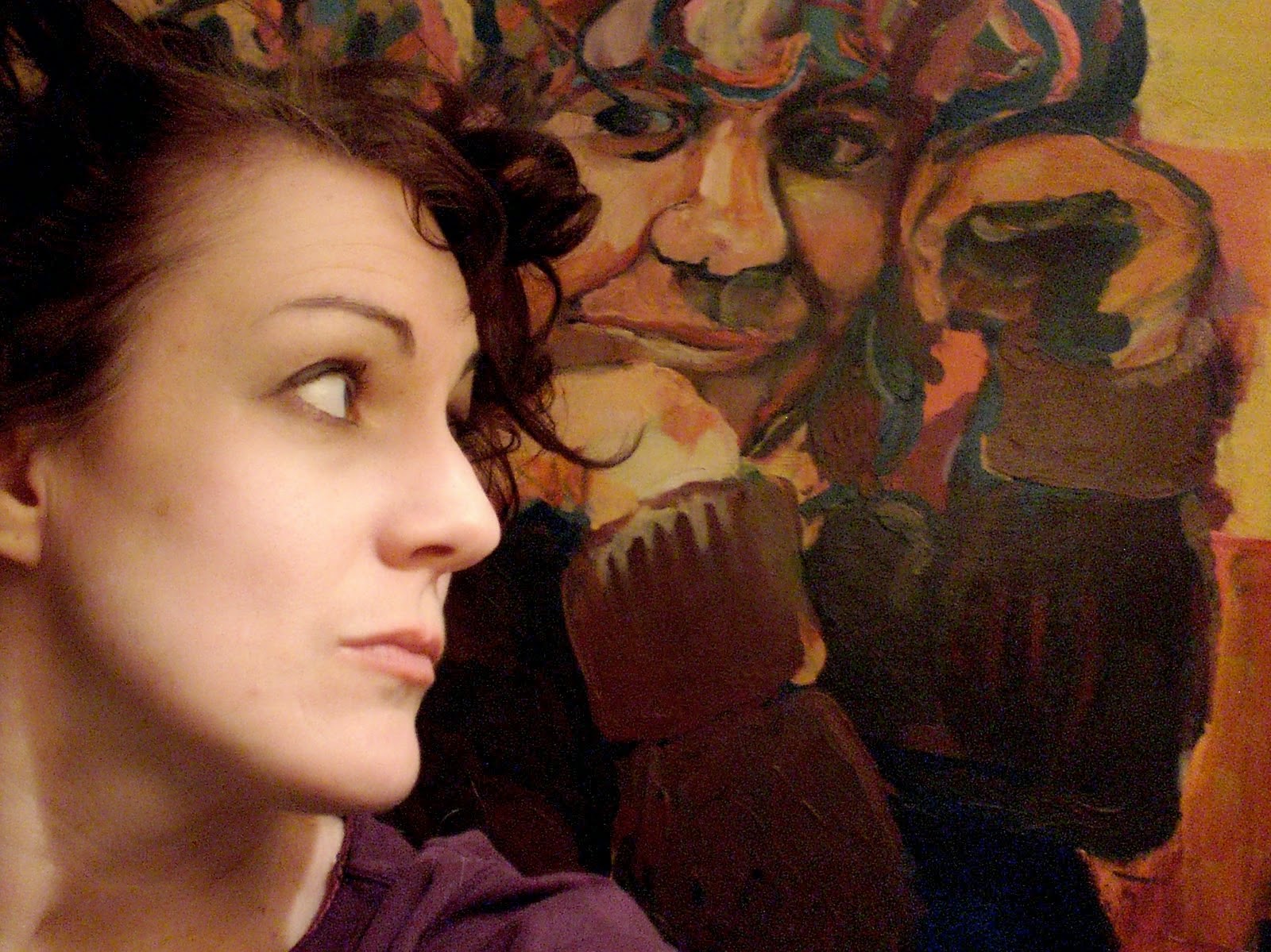
Are those two soap opera
stars trying to kill me?
 

I’ve said it once and I’ll say it again: you can’t always believe what you read! 

Shaking my head after reading Chiara Bottici’s article from March 3, 2013 on the online version of Al Jazeera’s opinion page, I’ve come to the conclusion that either the author is drastically misinformed, or she has fallen victim to a horribly trained editor. I have every confidence she has no ill intentions.

“Check your sources,” my journalism teacher would’ve said!

If this article had been written by a junior staffer at my high school newspaper, for which I was the Features editor, I could’ve excused its lack of depth and deadline-on-a-school-night inaccuracy. But it was written by an assistant professor of philosophy and published on a reputable site. Somebody should’ve known better. 

In her article “The death of opera: a funeral eulogy” (as opposed to a birthday eulogy, a wedding eulogy or perhaps a bar mitzvah eulogy? ... Oh, dear. Where’s my red pen?), Ms. Bottici claims the assumedly dying art of opera has been replaced by the soap opera. 

The author leads people (who might not know better) to believe that Ernani is Verdi’s most successful opera. It may have been in its time, but it’s hardly well-known now - I’d bet most opera singers couldn’t even tell you its plot. And even people who’ve never been to an opera can whistle the refrain of the famous “Libiamo” chorus from La Traviata, the tenor aria from Rigoletto, or the trumpety triumph song from Aïda heard at soccer games across Europe. Although she goes into massive detail about Ernani, she fails to mention which soap operas succeeded in wiping out 400 years of operatic tradition.

Assuming she’s not talking about As the World Turns or Days of Our Lives, shows which have been around since the 50’s and 60’s and are therefore not newsworthy (again tipping my hat to or pointing my finger at the editorial department), let’s  surmise that she’s talking about more recent dramatic television series such as “Mad Men” or “Downton Abbey.”

Whereas Mad Men successfully explores American themes through plots comparable to the literary works of Saul Bellows or Dorothy Parker  (talk about “sophisticated intellectuals,” Ms. Bottici), what is Downton Abbey other than a thinly-plotted daily soap with exquisite sets, costumes and good actors? And just for good measure, they throw in the occasional historical reference like the First World War: Oh, Mr. Crawley was paralyzed in battle, but it’s more convenient for our plot if he can walk and make babies...It’s a mircale! Then, oops! He died, how sad, the end. (Sorry for the spoiler if you haven’t finished season three, yet).

Ms. Bottici purports that soap operas have replaced opera because they’re alive and affordable. Granted, tickets to the opera can be expensive - the author cites decent seats as costing around $400. Later in the comment section to her article, however, she claims to go at least once a month. While I’m thankful to her for supporting my art form, I wish she would have spent part of her apparent fortune paying someone to put her thoughts into a more succinct article. I think she has sabotaged her own intentions, confusing us with stories of the actual Risorgimento rather than illustrate opera’s resurgence that is happening now.

For someone who supports opera, she’s not doing society any favors by resuscitating the stereotypes: opera is long, boring, expensive, elitist, incomprehensible, whatever. In New York City alone, where the author evidently lives, one needn’t pay $400 to go to a performance. There are standing room tickets for $20 - maybe not the best idea for a 5-hour Wagner opera, but there are shorter pieces. Tosca is only about two hours long, for example, and you get a break after just one hour. Many Hollywood blockbusters are clocking in around three hours these days. Incidentally, I sat through Django Unchained and Lincoln back-to-back (which would’ve cost me more than $20 in NYC) -- six hours, and you don’t hear me complaining. Many movie-goers have been subjected to Wagner without even realizing it. Quentin Tarantino is a huge fan, so it seems. There are free opera concerts in the park during summer months, bi-monthly Opera on Tap events in Brooklyn and around the country (yes, as in beer on tap. And opera. What’s not to like?).
Lastly, the fact that 3 million people across the globe gathered in movie theaters to watch last weekend’s simulcast of Wagner's Parsifal at the Metropolitan Opera for six hours (my ticket cost 29 Euros, by the way, and we had a better view and acoustic impression than even the most expensive seat in the Family Circle), is just further proof that opera is relevant, accessible, affordable and far from dying.


Wednesday, February 20, 2013

What are the chances...?

What are the chances that a 
Christmas cactus blooms during Lent?


• What were the chances that today would be sunny? 
80%, supposedly, but after months of cloudy skies and yesterday’s little blizzard, it seemed like a frickin’ miracle.

• What were the chances that I would be second in line at the consulate for my 8:30 appointment, and actually get in and out of there in about 30 minutes? 
Slim, considering non-US citizens had been standing in their much longer line for an hour by the time I got there. Luckily it was sunny. 

• What were the chances that I misunderstood part of the instructions which led me to believe I could pay with a personal check? 
Good, because I’ve been under the weather - way under - and not thinking clearly these days.

• What were the chances that I wouldn’t have the equivalent of $110 (which is actually €82.29, but in some tweak of inner-consular mathematics it was €88) or a major credit card on my person? 
I would say, rather excellent, since I don’t keep my credit cards together with my cash (which proved to be a clever move when my bag got stolen a year and a half ago), and see above.

• What were the chances that the U.S. Consulate General does not take the EC Karte (European debit card) as a form of payment?
Even better.


• What were the chances, that I would be standing behind a fellow opera singer in line at the cashier window (as well as outside) and that said opera singer happened to be carrying his score with him at the time so that this would be obvious to me?
You have no idea how many opera singers there are wandering around, but the chances that two of us would be standing next to each other in line at the consulate... Slim, very slim.

• What were the chances that I would work up the courage (i.e. audacity) to ask my fellow opera singer, a perfect stranger, if he happened to have €13 I could borrow?
Pretty good, because otherwise, I would have had to exit the consulate, walk 1.2 kilometers to the nearest cash machine and back (it was sunny, but it was also freezing) and go through the whole security rigamarole again.


• What were the chances that I would miscalculate, have to chase upstairs after my fellow opera singer, and grovel for another €10?
At this point, I’m thinking anything is possible (and he’s thinking I’m a bag lady).


• What were the chances that, en route to the cash machine to pay him back (by way of the 17-minute subway ride to the main station and a coffee), we would discover we not only have mutual friends, but we have mutual good friends?
The world is getting smaller....


• What were the chances that I got to repay karma almost immediately by giving a random woman at the subway stop the change she needed to buy a ticket?
A small, but clear sign.


• What were the chances that this encounter with my fellow singer, someone who is only a couple years older but far more operatically experienced than myself, would snap me back into a time when I was amongst the people I to this day love the most, reminding me of who I used to be before I was filled with insecurity, fear and self-doubt. Reminding me that I have everything it takes and more to survive in this business.
I don't know, but I'm feeling pretty lucky.


• What are the chances that I’ll get to sing with my new friend on stage? 
Slim. But after today, I’m willing to take my chances.

Thanks for the loan, Scarpia!

Now, what are the chances that I’ll get my new passport in time enough to fly to Madrid for performances in three weeks? 


Wednesday, February 6, 2013

Must the Winter come so soon and stay so long?


Must the winter come so soon?
Night after night I hear the hungry deer
wander weeping in the woods,
and from his house of brittle bark hoots the frozen owl.
Must the winter come so soon?
Here in this forest neither dawn nor sunset
marks the passing of the days.
It is a long winter here.
Must the winter come so soon?

Giancarlo Menotti from Samuel Barber’s opera, Vanessa


There are reasons for seasons, meteorologically speaking of course, but all creatures are slaves to their own rhythms, inwardly or out. It has indeed been a long winter here, and it just so happens to coincide with my time between jobs. Perfect. This was supposed to be, for me, a phase of rebuilding, polishing my act, learning new roles, devising a master plan, really making use of the time at hand. 

Allowing for the usual period of post-production depression, having just returned from a wonderful time in Hannover working with really great colleagues, I wasn’t too hard on myself for the month of December. A couple concerts came up around the holidays, which gave me a bit of motivation and cash, and I even wrote another blog entry for the first time since July. Any second now I was going to get to work on building my business. And learning Spanish. And redecorating the kitchen. And exercising, of course.

Rubbish. These are things for Spring, are they not? Winter is for hibernating, isn’t it? Aw, hogwash! I’ve got nothing else to do. Now’s as good a time as any! In between performances in November, I managed to go to yoga 2-3 times a week. Now I’ll surely go everyday, right? Right... in my dreams, as I slumber until the spirit moves me to wake up, or until a call from the Deutsche Oper am Rhein jolts me out of bed at 9:30 to jump in that very night for Barbiere di Siviglia. If only I had that kind of adrenalin rush every morning, then maybe I could actually get something done.

But what exactly is it that I am supposed to do? Learn Spanish? Okay, I signed up for a course. Redecorate the kitchen? I ordered some colorful Mexican oil cloth to adorn my cabinets. Exercise? I defeated my pig dog big time yesterday when I dragged my ass to Bikram yoga, almost turning around to go back home, whimpering as I walked up the steps to the studio only to plod on and have one of the best classes ever (life’s small victories). Practice? Yes, I suppose, I’m chugging away fleissig for my next role --rehearsals start in April....

You may ask yourself, how do I work this?
You may ask yourself, where is that large automobile?
You may tell yourself, this is not my beautiful house.
You may tell yourself, this is not my beautiful wife.

Talking Heads, Once in a Lifetime

Is that it? It’s still not enough. It’s not enough to fill the time in this ever so discontented Winter. It’s not enough to for me to say, I deserve that trip to Barcelona I just took with my friends so that I could please just see the blue sky for more than 20 minutes. It’s not enough for me to say, Sure I can come out tonight for a quick drink because, to be quite honest, nobody is scolding me for not getting anything done today. I feel like I haven’t done enough.

As we are creatures bound by the rhythm of the seasons, we are also animals trained by the concept of task and reward. That which makes me so successful when I  have a task makes my life miserable when I have none, for I am a faithful servant but a terrible master. I am meticulous, I am eager. I am punctual, I am righteous. This is my time to work and to reap the rewards. But there is no work, and I’m weary of inventing it.  Cleaning house? Filing taxes? Are these the most exciting tasks life has to offer me right now? So yes, why not Barcelona (it was lovely, by the way)? Why not do whatever I want, when I want? 

Perhaps it is because I am from the Desert, I am not trained in the ways of hibernation. I do not know how to Chill. The Fuck. Out. The life of a “so-called professional opera singer” (put that phrase in quotes into a search engine and you’ll get my life story), a freelance one at that, is not governed by the rules of working hours and weekends. Yea verily, we have our strongest moments between 7:30 and 11p.m. When the need arises, it’s going to arise at that time of day. But in the interim, our friends with ‘normal lives’ and ‘day jobs’ are going to demand our attention during these precious eventides and weekends.

And so the task is at hand, despite the season, despite the workload, to reap the rewards we have yet to sow. Oh, heck... isn’t harvest in the Fall? I have completely lost track. Who cares? Even if you don’t feel worthy of a night out on a Wednesday evening with friends, take it. Even if you don’t ‘deserve’ a day off, it’s all you have -- enjoy it. Do not stay home and brood as I have done. It is a long winter here, and next one will come too soon. 


Thursday, December 13, 2012

In Defense of Modern Opera Productions


I know how to read music, sing and act. People tell me I’m pretty good at all three. Bonus! It makes sense, then, that I have been supporting myself for over a decade in one of the only jobs that allow me to combine those three talents: opera. I love it. There, I’ve said it. I love opera. But when I say it, I doubt that I mean what you think I mean. Opera (stop saying that word. I do not think it means what you think it means).

There are many people, for their love of opera, who take a stance against so-called “modern” opera, claiming it destroys the intentions of the great masters. In fact, on Facebook some clever person of German persuasion (I can tell by his or her syntactical errors in English) has created a page dedicated to trash-talking of modern opera productions. And it has a lot of followers, including some of my colleagues. 

This Eurotrash ‘pestilence’ must be stopped! This is only a trend, and surely the masters will stand the test of time! And of course we must blame ze Germans. Germany, after all, is where most of these ‘abominations’ are being produced.

Germany (and the German-speaking countries Austria and Switzerland) also happens to be the only place on Earth where you can have a full-time job with benefits as an opera soloist, and it has dozens of towns with really reputable opera houses putting on hundreds of performances (if not thousands) each year. So, if you ask me, ze Germans can do whatever they want with opera. They’ve earned it. 

I realize many people are not going to agree with what I have to say here. It is a matter of taste, after all. I never even said you have to like opera in the first place. There are people I know and love who say, “Opera’s not really my thing” without ever having seen one. Those people are much more deserving of my understanding, however, than the antagonists of my story, who purport to be opera experts (and as far as opera history goes, to an extent, they probably actually are), and yet refuse to let this living, breathing art form change. My ignoramus friends are far more likely to be open to the risk of coming to see a show I’m in and forming a fresh opinion about it (good or bad) than these stodgy opera critics who think they know what I, the singer, want to achieve in my performance.

Why is opera the only art form which is so reluctant to evolve? (I guess I should mention at this point that I am talking about new dramatic stagings of older operas, not newly composed works) Should we stop at Monteverdi? Mozart? Massenet?  Where is the line? Should we stop composing operas altogether?  And if you really were an opera expert, you would realize that the period in history which “they” seem to idolize was as guilty of non-authentic performance practices as we are today. Instruments have changed (once in a great while you’ll see delightful performances played on historical instruments -- sometimes mixed with modern staging, which makes me feel right at home, like in my living room furnished equally with antiques and IKEA); making cuts in the score is standard practice (*gasp* what would the great masters say!?!?); voice type-casting has also become a fashionable, arbitrary matter.

The fascinating thing about opera is that there is one constant - the music (including the voice and the style and technique with which the music is sung). Neat, huh? But how many times do we have to see a Rigoletto wearing multi-colored tights and a funny hat with a hunchback? For how many hundred more years? That's not what it's about. Whether he's a court jester, or a janitor in Trump Tower (MY idea, don’t steal it), it's still about the hypocrisy of the upper class.  And who cares about the political conspiracy against the King of Sweden in 1792? Huh? Yeah, that's right - no one. What we care about in Il Ballo in Maschera is Gustav falling in love with his best friend's wife, and wanting to ban them both to a far away land so that he can uphold his honor and not taint their friendship (a picture of the production from Erfurt is what gave me the idea to write this blog entry in the first place). Pity that everything gets screwed up and he ends up getting killed in the end. Because that can happen any day. In any costume. In any place. And I see no problem in taking these antiquated political plots and making them into something more accessible or relevant to a more modern concept, such as the Erfurt production in Ground Zero. Or what about that fascinating set at the Bregenzer Festspiele of the same piece? (Google is your friend: I won't post the photos here)

I wish I could placate the tirades of the traditionalists. We still use the instrument the way it was originally made, after all. Look at how much the camera has changed since people started taking pictures or making films, for example. I guess painters still use brushes and, well, paint. But look at the difference between DaVinci’s Mona Lisa and Picasso’s portraits of women. The techniques are totally different. Still, how do we judge what is ‘good’ in art? In painting, whether it be Picasso or DaVinci, we’re still looking at color, composition, or maybe chiaroscuro and brush-strokes. It’s how we can tell the difference between Caravaggio or the Dutch dudes who tried to emulate him.

And in singing, whether the backdrop is a velvety, gilded king’s throne or a toilet in a butcher shop, for all I care, the voice is still judged by timbre, intonation, musicianship and consistency. Opera, no matter how you slice it, is still a collaboration of set and costume designers, directors, musicians and conductors in which the music is a catalyst for the drama (in case you were wondering, I was including singers under the category of musicians - yes, I am one).

The traditionalists want to bring back the Golden Age of Opera, because they blame the modern productions for dwindling audiences and killing the genre. Yeah, okay, so, bring back the days where people didn’t even pay attention - they walked around, ate dinner, talked to each other, left in the middle of the performance to get an ice cream during the Aria di Sorbetto. Now translate that to today: If somebody talked and used an iPad while I was performing, I'd bop them upside the head. No one would care if I broke character if they weren't paying attention, would they? I think it's fallacious to think of opera as anything else but theater (would you chomp on popcorn during Hamlet's monologue in the play? Didn’t think so), and even scarier to think that people can't sit still for more than five minutes. So, invent a "sciatica section", where people with back problems can walk around. Sure, bring in a glass of wine and some cheese, but please... pay attention!

There is a much more evil force out there threatening to kill your precious “opera” - the likes of Katherine Jenkins, Paul Potts, Charlotte Church and, yes, even Andrea Bocelli. And yet these people against modern opera productions catapult into a critical frenzy when they see one single photo from Erfurt’s Il Ballo in Maschera on Facebook or an excerpt from Bayreuth’s Lohengrin on YouTube, trading countless indiscriminate comments about how the ego of the Regisseur is killing the art form. You don’t like it? Fine. But back your opinion up with a few criteria besides one picture.

Heck, every now and again, I like to put on a pretty gown and sing a pretty aria. I, too, am proud to be a part of an art form that has existed over 400 years - even longer when you consider that the voice was the first musical instrument ever made.  But why do I sing? My answer to that question is not etched in stone, nor tattooed on my ass. I enjoy singing for singing's sake - I especially enjoy portraying a character, combining the music and the drama, expressing and creating something on a stage in the moment. It doesn't matter how Callas did it, how Deutekom did it, how Schwarzkopf did it, how Ponselle did it.... Yes, we can watch and learn, but we can also DO and learn, and find the answers within ourselves, together with our directors and conductors, our friends and colleagues, no matter what the set looks like or how the story is being told.

 As for opera’s “Golden Age,” the title character of Baby Doe says in Douglas Moore’s opera from 1956: “Gold is a fine thing for those who admire it. ... Gold is like the sun, but silver lies hidden in the core of dreams.”  We’ll see ... 

photo: Caroline Harvey

Saturday, July 14, 2012

The Comfort Zone: Part Two


Previously on The Comfort Zone...  I was sitting in a regional train, literally as well as figuratively, in a rather uncomfortable seat going nowhere really fast.
Today I’m sitting in the fast train -- literally as well as figuratively -- on the way back from a job that I couldn’t have said “Yes” to had I not said “No, thank you” to my previous Comfort Zone. It had been risky, I thought, to turn something down even when I had nothing. But it paid off. Even before the productions in question, which would have collided with each other timewise, once I said “No” to the Comfort Zone offer, bigger and better things started pouring in. 
This season I have been an operatic superhero, doing most of my singing by “saving the day”, jumping in for various roles, two of which I’d never actually sung before. It has definitely been a fun ride: being compensated adequately for my efforts,  working with colleagues who match and even surpass my level. But these people here outside my Comfort Zone have superpowers, too. They can see right through me. 
I may have amazed them with my super-fast learning skills, my ability to juggle (see previous post: “It Takes Balls to be an Opera Singer”), and my cooperative manner, but they recognize that I’m not quite reaching my full potential. I may be a superhero, but I am not a superstar. I’m not talking in terms of salary or renown but rather vocal production.
There is something out there (maybe my operatic evil nemesis alter ego within or something) that prevents me from taking better care of myself and my voice. I’m not saying I stay up all night partying or that I eat badly and don’t exercise. It’s more like flossing your teeth or drinking 8 glasses of water a day. You know you should do it, but do you? Really. Do you??
Well, good for you.
Discipline is not one of my strong points. I have patience (or maybe I’m just stubborn) and tenacity (or maybe I’m just stubborn) and ambition (or maybe I’m just ... stubborn?) which has gotten me as far as I am. And for certain roles, my vocal efforts are more than sufficient. But to consistently take it up a notch, and sing roles which require not only natural ability, but skill, I am going to finally have to concentrate and do all those things that my great teachers and coaches have told me to do. It's the difference between being excellent and being exquisite.
What? Do you mean to tell us that you don’t sing well, Christine? Well, no. I do all right. But we have to remember that the purpose of practicing is to train your body into doing the right thing without having to think about it. And until that becomes automatic, I’m going to have to pick up the speed a bit. It takes a lot more momentum than I’m used to to jump on a moving fast train.

Tuesday, April 17, 2012

It Takes Balls to Be an Opera Singer


This entry was inspired by a post in Cheryl Studer’s new blog: 
http://cherylstuder.blogspot.de
I'm looking forward to more such fascinating insights from Ms. Studer, and glad she's decided to bless the blogosphere with her presence!

For a production of Hänsel und Gretel in 2005 I had to learn how to juggle. I’d had some luck juggling in the past, but had never really learned the technique, so the director had an experienced juggler come in to teach me and my colleagues how to do it right. Performing opera is not unlike juggling, in that there are three things, balls so to speak, that have to be in motion simultaneously in order to assure successful performance: singing, making music, and acting the part.
Patrick, our juggling teacher, began by having us throw one single ball up into the air. He showed us that you don’t have to keep your eye on the ball to catch it - you just have to watch where you throw it, and when it comes down, your hand automatically knows where to go. (If you’ve ever watched jugglers carefully, you’ve probably noticed that they’re almost always looking up). Also, we were able to get used to the amount of power we needed to throw the ball high enough, or not too high, into the air, first with the right, then with the left.
It should be a given that you know how to throw a ball before you start juggling, much like you should always be working on your singing technique before taking it out on the stage. Nothing is more disappointing than having your stage partner forget everything you’ve worked on during staging rehearsals because all of a sudden they’re worried about their technique. If you let that ball drop, you leave your colleagues in the lurch.
The second step of our juggling lesson involved juggling two balls with one hand. Basically we were repeating the first step, but by adding the second ball, the whole action went twice as fast - kind of like learning a difficult passage of music slowly at first and then speeding it up. Then we took one ball in each hand, threw them up and let them fall. We were to listen to the rhythm when they landed. If we heard “ba-dump” that was correct. If it was “ba......dump”, we worked on it until we got the rhythm right.
This second step is crucial to the success of the third element, or ball - the action. Have you ever heard that joke about the conversation with an actor?
“What do you do for a living,” asked the reporter.
“I’m an actor,” said the man.
“What’s your -”
“Timing!”
“ ... problem?”
Learning your music solidly makes taking the role on stage oh so much easier. I had the challenge recently of having to take over a role in Lady MacBeth of Mtsensk on short notice - I’d never heard it before, much less performed it. Within five days I had to learn and memorize the music, in some parts very rhythmically complicated. I had one or two stage rehearsals, and that was it. The simplest scene was the one I kept messing up, since I’d spent most of my time perfecting the more difficult passages. I went out on the stage during rehearsals with the easy phrases learned, but not well enough. So, while I was concentrating on the staging - making sure I enter at the right time, making sure the windows were open, making sure to start my action before pretending not to notice the tenor so that I can act surprised and get mad before telling him to go away - I skipped a phrase, switched my text and confused the conductor who was trying to keep me together with the orchestra, which at this point consisted solely of a lonely bassoon. We had to interrupt the rehearsal (the dress rehearsal, no less!) and start at my entrance again. Embarrassing....
Luckily, the premiere went along without a glitch. 
Even if no one notices it, dropping a “ball” during a performance always makes the singer’s own experience of his or her performance a little less enjoyable. Listening to the recording of the recital I gave last week, I’ve counted at least 5 mistakes of varying degrees, and I’m sure I’ll find more the next time I listen. I’m trying to forget about it, but since I only had the one shot to get it right (so far), I’m still rather angry with myself, wishing I would have practiced even more than I already did.
Back then during Hänsel und Gretel, there may have been performances where I made no musical mistakes, but I’m sure there wasn’t a night when the stage hands weren’t collecting tennis balls in the wings. The trick is, I guess, to keep practicing and practicing until everything flows smoothly, and you don’t have to think about it. Unfortunately, no step can be skipped. Knowing how to throw one ball in the air is just as crucial to the process as being able to juggle two or three, or even more. If you drop one, you just have to pick it up or let it lie, forget about it and act like you meant to do it that way.

Tuesday, March 13, 2012

I'll Have What She's Having ... Tapas For Singers

Gracias por su visita: Cafe Cristina in Madrid
We’ve all been there before: you go to a restaurant with friends, sit down, order, chit-chat while you wait for the food, slowly gaining an appetite for what you just ordered. Then the waiter brings the meals and you see what your neighbor has -- oh, now that looks delicious. Why didn’t I order that?
Now your own meal is unsatisfying, but you’re stuck with it. It’s a chore to finish, and the one or two morsels that your kind friend has allowed you to sample from her plate are not enough to appease your desire. Why didn’t you order that? Trading plates would be a bit awkward, and besides, why should your friend have to give up the meal she’d been craving all along just to make you happy?
Ah, envy.
I often go out to eat alone, usually when I’m in the mood for something specific and feel the urge to have it right that minute. I happen to live across from a very good café, and I only go there to eat when I want “my usual”. When I walk in, the wait staff already knows my order (oh my god, I’m turning into my dad), and if I ask for something different, they’re startled and ask me if I’m okay. 
If I want a bagel, there are only a couple places that serve them right, and ordering one anywhere else is taking a risk. Speaking of which, who knows why I continue to try Mexican restaurants here in Germany, having been disappointed by every single one, but I never give up hope.
Ah, hope. Ah, regret.
It was at my trusty Stammlokal (regular place) a while back where I got a sandwich (not my “usual”) on bread that was rock hard. I took a bite and thought, ‘Ewww, this is hard!’ but took three more bites, considered just eating the contents of the sandwich and not the bread, before working up the nerve to ask them to make a new one. This was, of course, no problem at all for them. But the fact that it took me so long to change my order - seriously, it was a conundrum - was an alarm signal to me.
Ah, the point....
At the smörgåsbord of singing, there are plenty of things to choose from:
Comprimario a la mode
for starters, a light load of small roles (no butter)
comprimario topped with mild recognition and a twist of lemon
Concert Combination Plate
only available at Christmas and Easter, or other special occasions 
Summer Salad
not quite as filling as a main dish, served on the terrace, possibly in the rain
Prima Donna
a filling portion of hearty goodness, well done, served in three to five acts, finishing with a glass of wine and a bouquet of roses


With such a selection, sometimes it's hard to know what you want, until you see someone else getting it.
To celebrate the completion of a production last weekend, I went with my colleagues to our temporary Stammlokal, a wonderful tapas bar just around the corner from the theater. Although we were used to their somewhat lackadaisical service, the food is very good, and the drinks are a-plenty. Plus we enjoyed each other’s company, so the slow service never really mattered. But on this particular night, the orders got mixed up. Somehow, we all waited almost an hour to get any food, the drinks took a while, and we had to go a beg for a basket of bread to tide us over, having just come very hungry from our last performance. 
My order, even though I'd been the first one there, was the very last to trickle in, tapa by delicious tapa. All the while, people who had arrived after me were getting their dishes. They were offering me bites of this and that - would you like an albondiga? How about a patata arrugada? You want a bit of my tortilla? For once, I was completely happy with what I ordered. And although I was getting cranky from hunger, impatient, seriously near tears, and maybe even a bit rude, I declined their gracious offerings by sternly replying, “Thank you, but I want the food that I ordered!” And when my boquerones finally arrived, I savored every perfect bit. Giddy with joy, I shared my pimientos, and relished my manchego like it was a bar of rare, exquisite chocolate.
Ah, the lesson.
As I see some of my friends making their debuts at major opera houses, or premiering roles I wish I would have been hired to sing, or planning the births of their babies between gigs, or taking on jobs with decent salaries, I wonder if that’s what they ordered in the first place. Or if perhaps they’re looking at my plate, wishing they could have a bite of mine.